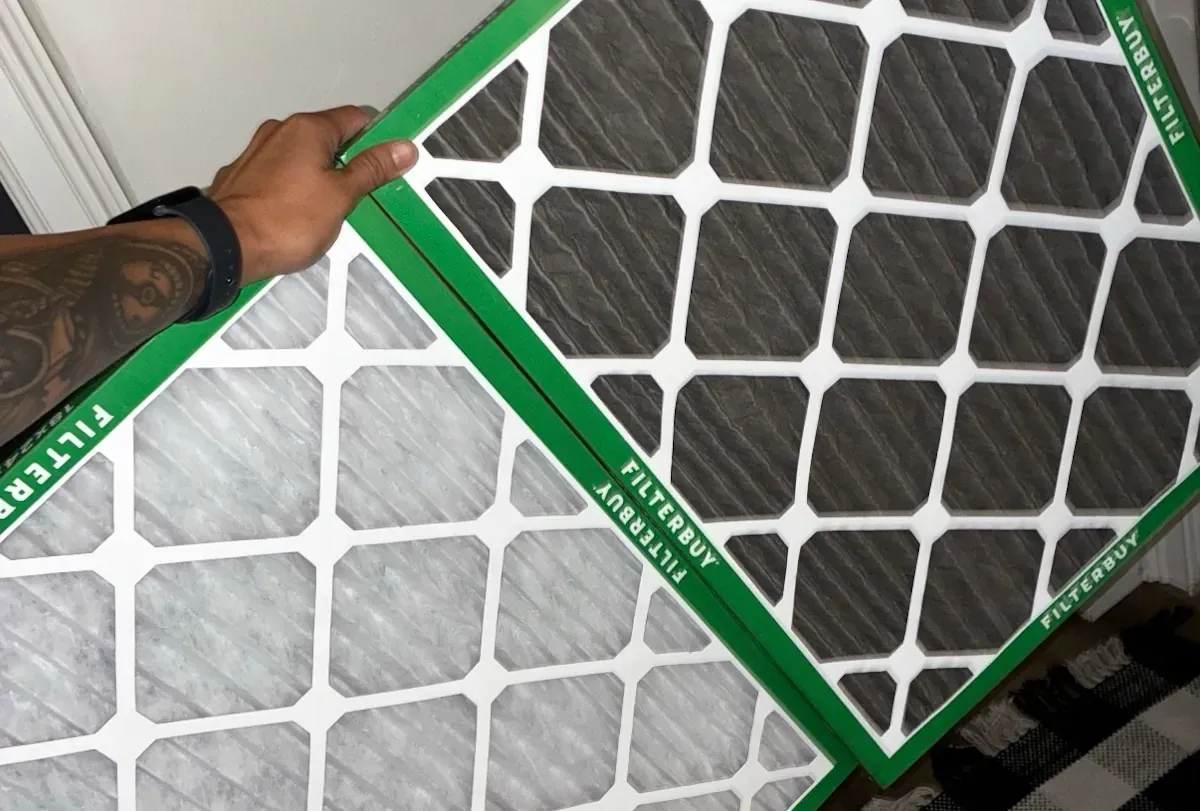
HVAC Filters Explained: Why the Right Filter Matters More Than You Think

If you’ve ever walked down the filter aisle at a home improvement store, you’ve probably noticed dozens of options that all look almost identical. Different brands. Different prices. Different ratings.

It’s easy to assume they’re all basically the same.

The truth? They’re not—and choosing the wrong filter can affect your home’s comfort, indoor air quality, energy efficiency, and even the lifespan of your AC system.

In Southwest Florida, where your AC runs almost year-round, your filter does much more than catch dust. It’s one of the most important parts of keeping your HVAC system operating efficiently.

What Does an AC Filter Actually Do?

Your HVAC filter has one primary job: protect both your home’s air and your AC system.

As air circulates through your home, the filter captures:

  • Dust
  • Dirt
  • Pet hair and dander
  • Pollen
  • Mold spores
  • Lint
  • Other airborne particles

Without a filter, those contaminants would collect inside your air handler, evaporator coil, blower motor, and ductwork. Over time, that buildup reduces efficiency and can lead to costly repairs.

Why Filters Matter More in Florida

Southwest Florida homes place unique demands on HVAC systems.

Your AC often runs:

  • Nearly every day of the year
  • Longer cooling cycles
  • During periods of high humidity
  • Through pollen season
  • During construction and landscaping activity that creates additional dust

In Southwest Florida, high humidity often turns fine dust into a damp, sticky film that binds directly to your filter’s fibers, while intense spring oak pollen seasons blanket systems in heavy debris. Because this combined moisture and buildup clogs air paths far faster than dry dust alone, checking your filter monthly is essential to prevent airflow restriction and keep your AC running efficiently year-round.

A neglected filter in Florida can become clogged surprisingly quickly, restricting airflow and forcing your system to work much harder than necessary.

The Biggest Misconception: “A Higher-Rated Filter Is Always Better.”

This is probably the most common myth we hear.

Many homeowners believe buying the thickest or highest-rated filter automatically means cleaner air and a healthier HVAC system.

Unfortunately, that’s not always true.

Every HVAC system is designed to move a certain amount of air.

Some high-efficiency filters are so restrictive that they reduce airflow below what your equipment was designed to handle.

When airflow is restricted, it can lead to:

  • Higher energy bills
  • Reduced cooling performance
  • Frozen evaporator coils
  • Increased wear on your blower motor
  • Shorter equipment lifespan

In other words, the “best” filter isn’t necessarily the one with the highest rating—it’s the one that’s right for your specific system.

Understanding MERV Ratings

One of the biggest differences between filters is the MERV rating.

MERV stands for Minimum Efficiency Reporting Value, which measures how effectively a filter captures airborne particles.

Here’s a simple guide:

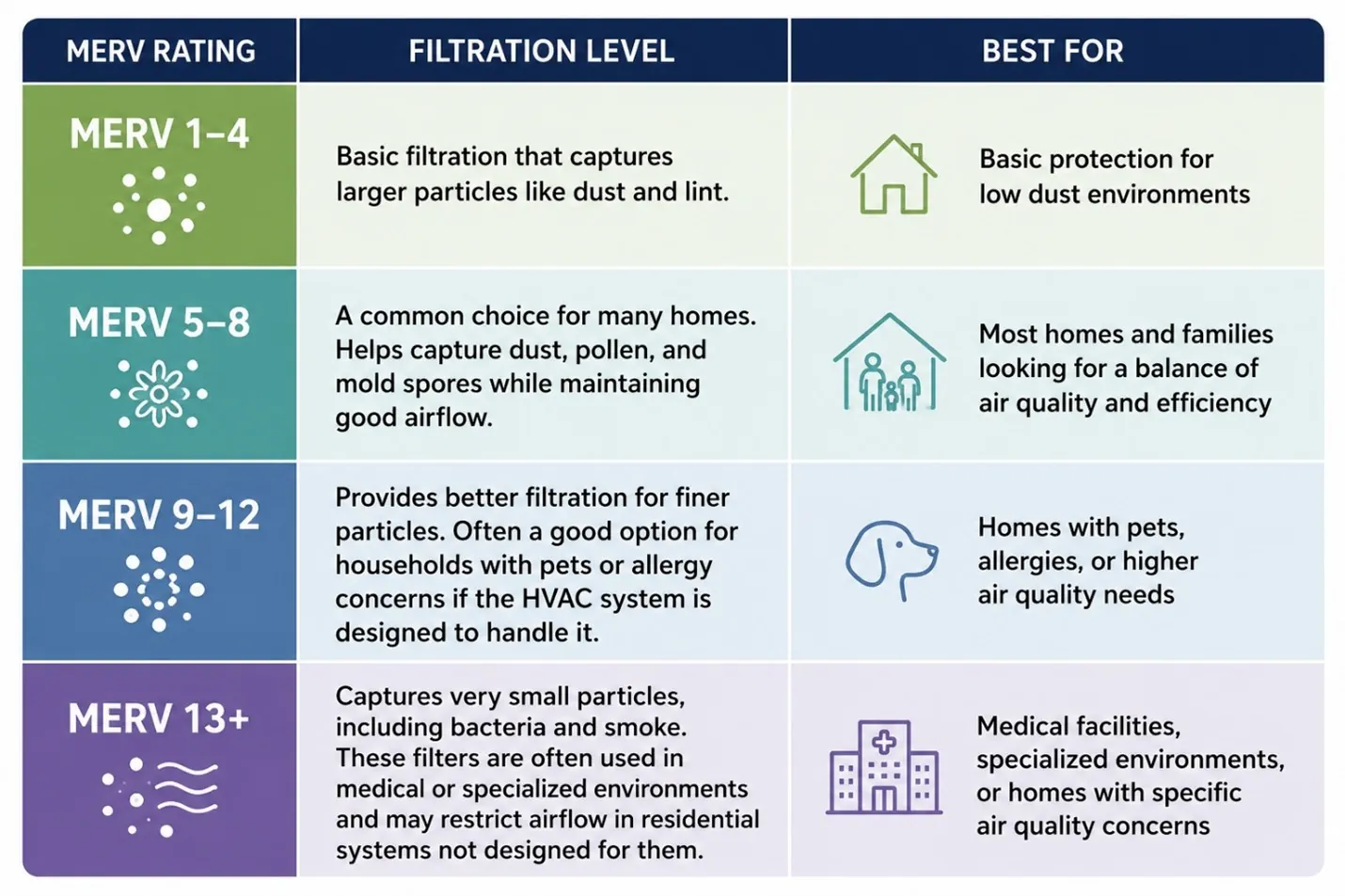
MERV 1-4

Basic filtration that captures larger particles like dust and lint.

MERV 5-8

A common choice for many homes. Helps capture dust, pollen, and mold spores while maintaining good airflow.

MERV 9-12

Provides better filtration for finer particles. Often a good option for households with pets or allergy concerns if the HVAC system is designed to handle it.

MERV 13+

Captures very small particles, including bacteria and smoke. These filters are often used in medical or specialized environments and may restrict airflow in residential systems not designed for them.

Before upgrading to a higher MERV rating, it’s a good idea to check what your HVAC system recommends.
Not All Filters Are Built the Same

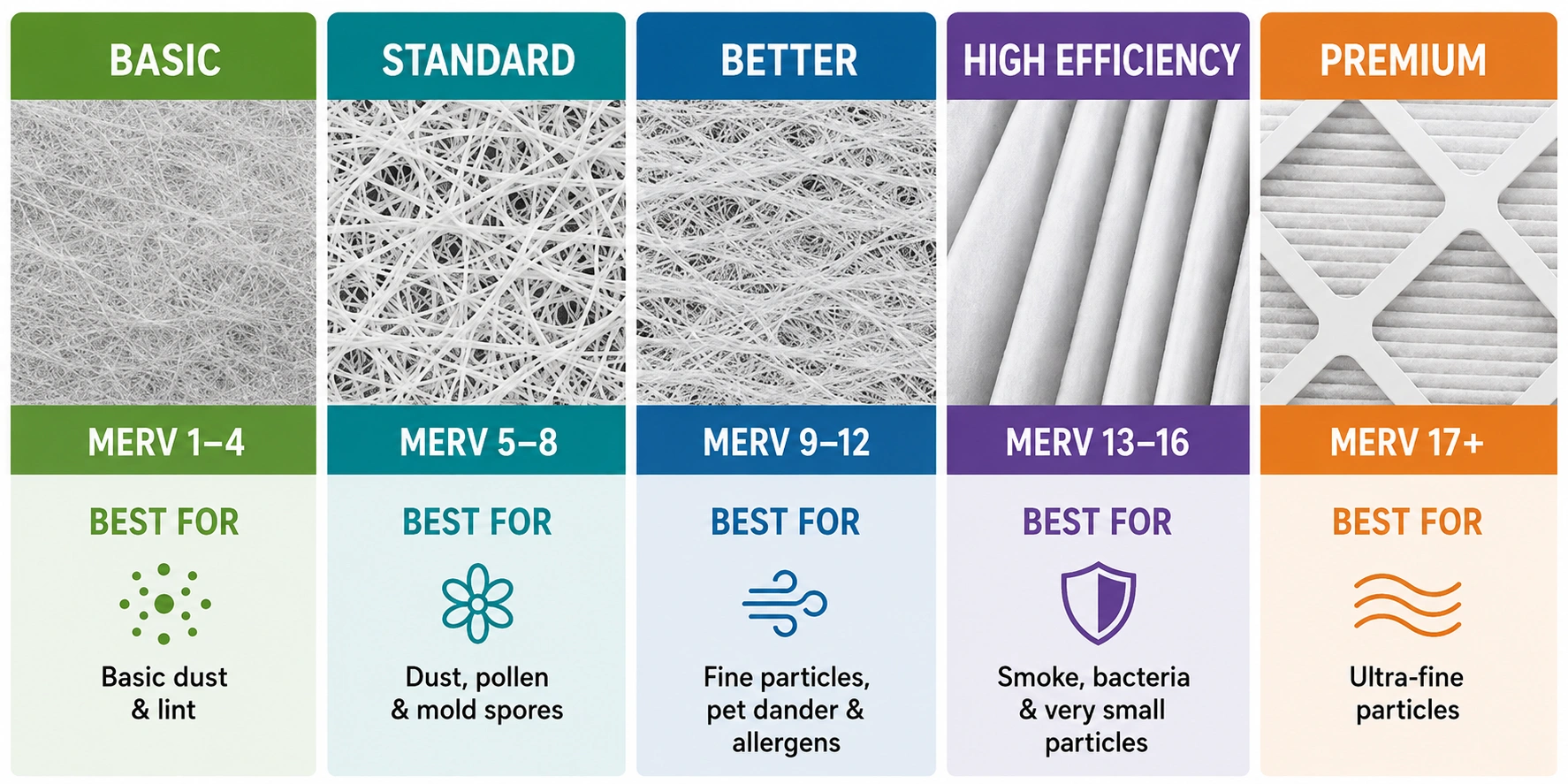
Even filters with the same size and MERV rating can perform differently.

Differences include:

  • Filter material
  • Pleat design
  • Surface area
  • Airflow resistance
  • Overall construction quality

A poorly made filter may clog faster or allow air to bypass the filtering material altogether.

Quality matters.
How Often Should You Change Your Filter?

There’s no one-size-fits-all answer.

It depends on factors like:

  • Pets
  • Number of people in the home
  • Indoor air quality
  • Remodeling projects
  • Allergy concerns
  • How often your AC runs

As a general guideline:

  • Every 30 days for basic 1-inch filters during heavy AC use
  • Every 60–90 days for many standard households
  • More frequently if you have multiple pets, allergies, or ongoing construction nearby

The best habit is to check your filter monthly, even if it doesn’t need replacing every month.

Signs Your Filter Needs to Be Replaced

Watch for:

  • Visible dirt or dust buildup
  • Reduced airflow from vents
  • Longer cooling cycles
  • Increased energy bills
  • More dust around your home
  • Uneven cooling
  • The filter appears gray or clogged

Waiting until the filter is completely dirty can put unnecessary strain on your HVAC system.

Can a Better Filter Improve Indoor Air Quality?

Yes—but only to a point.

A quality filter can reduce airborne particles and improve indoor air quality.

However, filters aren’t designed to solve every air quality issue.

Humidity, duct leakage, ventilation, and whole-home air purification systems also play important roles.

If someone in your home struggles with allergies, asthma, or respiratory concerns, an HVAC professional can recommend solutions that go beyond simply changing your filter.

The Bottom Line

Your HVAC filter is one of the simplest—and most affordable—ways to protect your comfort system.

But bigger isn’t always better, and more expensive doesn’t automatically mean it’s the right choice.

The best filter is one that:

  • Fits your system correctly
  • Provides the right balance of filtration and airflow
  • Is replaced regularly
  • Matches your home’s specific needs

If you’re unsure which filter your system should use, ask during your next HVAC maintenance visit. A quick recommendation today can help improve comfort, reduce energy costs, and extend the life of your equipment for years to come.

At Elevate Home Services, we believe homeowners deserve honest advice—not one-size-fits-all answers. Whether it’s selecting the right filter, improving indoor air quality, or keeping your AC running efficiently through another Florida summer, explore our Maintenance Membership Plans to keep your system running smoothly year-round.
Understanding HVAC Warranties: What Every Southwest Florida Homeowner Should Know

Serving Fort Myers, Naples, and Cape Coral homeowners

If you’re a homeowner in the Fort Myers, Naples, or Cape Coral areas, your air conditioning system isn’t a luxury—it’s essential. In Southwest Florida’s heat, humidity, and coastal conditions, your HVAC system runs harder, longer, and under more stress than systems in most parts of the country.

That’s why HVAC warranties matter so much here.

At Elevate Home Services, we regularly speak with homeowners who believed they were protected—only to find out, when something went wrong, that their warranty didn’t cover what they expected. This guide is here to change that.

Below, we’ll walk through HVAC warranties in clear, straightforward terms—what they cover, what they don’t, and how Southwest Florida homeowners can protect themselves from expensive surprises.

What Is an HVAC Warranty?

An HVAC warranty is a written promise that certain parts, labor, or system components will be repaired or replaced if they fail within a specific time period.

The key word is written.

A warranty should clearly outline what’s covered, for how long, and under what conditions. Verbal assurances don’t protect homeowners—documentation does.

Most HVAC systems include multiple warranties, each covering different aspects of the system.

The Three Main Types of HVAC Warranties

1. Manufacturer’s Parts Warranty

This warranty comes from the equipment manufacturer—not the installing contractor. Most modern HVAC systems include a 10-year parts warranty, but only if the system is registered properly and maintained.

What homeowners should know:

  • Covers manufacturer defects in parts
  • Does not include labor
  • Requires timely system registration (often within 60–90 days)
  • Requires documented maintenance

In Southwest Florida, manufacturers are especially strict about maintenance requirements due to heat, humidity, and salt exposure.

2. Labor Warranty

Labor warranties are provided by the installing company and cover the cost of diagnosing and replacing failed components.

This is where many homeowners are caught off guard. Even with a valid parts warranty, labor costs can still be significant if labor isn’t covered.

Labor warranties typically range from 1 year to 10 years, depending on the company’s standards and confidence in their installation process.

At Elevate, we believe labor protection matters—because a warranty that only covers parts still leaves homeowners exposed.

3. Workmanship or Extended Warranties

Workmanship warranties protect against failures caused by installation issues. These warranties reflect how seriously a company takes system design, installation practices, and long-term performance.

In a climate like Southwest Florida’s, proper installation isn’t just important—it’s critical. Even a high-quality system can fail early if it isn’t installed correctly.

Strong workmanship warranties are one of the clearest indicators of a contractor who plans to stand behind their work.

What HVAC Warranties Usually Don’t Cover

Even the best warranties have limitations. Common exclusions include:

  • Acts of God
  • Flood damage
  • Lack of maintenance
  • Improper installation

Many manufacturers require proof of annual maintenance. This is why transparency matters. At Elevate Home Services, we believe homeowners should understand exclusions before a problem occurs—not after.

Why Maintenance Is Often the Difference Between Coverage and Denial

One of the most common reasons HVAC warranty claims are denied is missed or undocumented maintenance.

Most manufacturers require routine professional tune-ups to keep warranties valid. In Fort Myers, Naples, and Cape Coral—where systems run nearly year-round—this requirement is especially important.

Routine maintenance helps:

  • Catch small issues early
  • Reduce strain on major components
  • Improve efficiency and system lifespan
  • Maintain warranty eligibility

Maintenance isn’t just about preventing breakdowns—it’s about protecting your investment.

Are HVAC Warranties Transferable When You Sell Your Home?

Some HVAC warranties can transfer to a new homeowner, but transfer rules vary by manufacturer.

Transfers may:

  • Reduce the remaining warranty period
  • Require transfer fees
  • Require proof of professional installation and maintenance

If resale value matters to you, understanding transferability upfront can add real value to your home.

Choosing an HVAC Warranty You Can Actually Rely On

Not all warranties are created equal. In many cases, the strength of a warranty reflects the standards of the company providing it.

When evaluating HVAC warranties, Southwest Florida homeowners should look for:

  • Written warranties and guarantees
  • Clear explanations of coverage and exclusions
  • Labor protection—not just parts coverage
  • Installation standards that support long-term performance
  • Maintenance programs that help preserve warranty eligibility

At Elevate Home Services, we believe a warranty is only as strong as the company standing behind it. That’s why we focus on written promises, transparent communication, and long-term accountability.

HVAC installation for Southwest Florida homeFinal Thoughts for Southwest Florida Homeowners
HVAC warranties can either provide real peace of mind—or a false sense of security—depending on how well they’re understood.

The best protection comes from:

  • A properly sized, quality system
  • Expert installation
  • Clear, written warranties
  • Ongoing professional maintenance

If you’re unsure what your current HVAC warranty covers—or you’re considering a new system—getting clarity now can prevent frustration later.

At Elevate Home Services, our goal is simple: help homeowners in in the Fort Myers, Naples, and Cape Coral areas make informed decisions that protect their comfort, their homes, and their peace of mind.

Because in Southwest Florida, your comfort shouldn’t depend on fine print.

image

Why Choosing the Cheapest HVAC Option Can Cost You More in the Long Run

Written by Justin Carrol, Home Services Industry Leader at Elevate Home Services


When an air conditioner fails in Southwest Florida, the decision feels urgent. The heat builds fast, humidity follows, and every hour without cooling matters. In that moment, many homeowners focus on one thing: finding the cheapest HVAC option.

After years of providing HVAC repair, installation, and replacement services in Southwest Florida, we’ve seen a consistent pattern:

Choosing the lowest-priced HVAC contractor often leads to higher costs over time.

Not immediately—but over the life of the system.

This insight isn’t theoretical. It comes from real service calls where we’re asked to fix systems that were installed cheaply and failed early.

What Happens After Homeowners Choose the Cheapest HVAC Company

We rarely see HVAC systems fail because they were “too high-end.”
We see failures caused by poor installation, rushed labor, and cost-cutting decisions made to win a low bid.

Some of the most common problems we’re called out to resolve include:

  • Premature compressor failure
  • Rising energy bills caused by improper system sizing
  • Excess indoor humidity and poor airflow
  • Repeated refrigerant leaks
  • HVAC systems failing years earlier than expected

In most cases, the equipment itself wasn’t the issue.
The installation quality was.

Why HVAC Installation Quality Matters More Than Price

In hot, humid climates like Southwest Florida, air conditioning systems run harder and longer than in most parts of the country. Even small installation errors can significantly reduce efficiency and lifespan.

Cost-driven HVAC installations often skip or rush:

  • Proper load calculations
  • Airflow and duct evaluations
  • Accurate refrigerant charging
  • System startup and performance testing

These shortcuts may not cause immediate breakdowns—but they steadily increase operating costs and wear on your system.

That’s when a “cheap HVAC install” becomes an expensive long-term problem.

Cheap HVAC Quotes Often Mean Limited Warranties

One of the biggest differences between low-cost HVAC options and properly priced installations is who carries the risk.

Many budget HVAC companies offer:

  • Short or unclear labor warranties
  • Manufacturer warranties that aren’t fully explained
  • Little accountability once installation is complete

When problems arise months or years later, homeowners often pay out of pocket.

At Elevate Home Services, we believe the risk should never land on the homeowner. That’s why our warranties and guarantees are always clearly defined and in writing—so you know exactly what’s covered and for how long.

HVAC Experience Reveals the True Cost of “Cheap”

After servicing thousands of homes, one thing is clear:

HVAC systems don’t usually fail because they’re old. They fail because they were stressed from day one.

Low pricing often means cutting costs in:

  • Technician experience and training
  • Installation time
  • Equipment quality
  • Long-term service support

Those savings show up later as higher repair bills, shorter system life, and frequent service calls.

Why Elevate Home Services Is Not the Cheapest HVAC Company

We’ve never positioned ourselves as the cheapest HVAC contractor in Southwest Florida—and that’s intentional.

We invest in:

  • Experienced, well-trained technicians
  • Proper installation time
  • Equipment designed for Florida’s climate
  • Industry-leading written warranties
  • Long-term accountability

These choices may cost more upfront, but they consistently deliver lower lifetime HVAC costs and better comfort.

Our clients choose Elevate because they value:

  • Fewer breakdowns
  • Stable energy bills
  • Reliable system performance
  • Clear, long-term protection

What to Ask Before Choosing an HVAC Contractor

Instead of asking, “Who’s the cheapest?” consider asking:

  • Who will be installing my HVAC system?
  • How long is the labor warranty—and is it written?
  • Is the system sized specifically for my home?
  • What happens if something fails after the first year?
  • Will this HVAC company be here long-term?

The answers to these questions matter far more than the initial price.

A Better HVAC Decision Saves Money Over Time

If you’re considering an HVAC repair or system replacement in Southwest Florida and want clear, pressure-free guidance, we’re here to help.

We’ll explain your options, the long-term implications, and what truly affects cost over time—so you can make a confident decision for your home.

Because elevating lives isn’t about being the cheapest HVAC company.
It’s about doing the work right—and standing behind it.

Schedule your HVAC consultation at ElevateMyHome.com

About the Author

Justin Carrol is a home services leader and HVAC industry professional with extensive experience overseeing residential air conditioning, heating, plumbing, and electrical operations across Southwest Florida. As a leader at Elevate Home Services, Justin works closely with licensed technicians to ensure every installation, repair, and maintenance visit meets the highest standards of safety, performance, and long-term value.

With a strong focus on system reliability, proper installation practices, and homeowner education, Justin is passionate about helping homeowners make informed decisions that protect their comfort, energy efficiency, and investment. His work reflects Elevate’s mission of elevating lives—by prioritizing people, accountability, and quality in every home served.

If Southwest Florida Ever Needs Heat… Here’s What Needs to Happen

Hi, it’s Adam from Elevate Home Services.

It doesn’t happen often, but every once in a while, Southwest Florida gets hit with a stretch of unseasonably cold weather — the kind that makes you finally reach for that thermostat and flip it from cool to heat.

And if you’re like most of us, it’s been months (or maybe even years) since your heating system has had to do much work. That’s why a little preparation before the chill hits can save you from some big headaches — and even bigger repair bills.

So before those temperatures dip next week, here’s what you should do:

1. Test your heat before you need it.

Go ahead and turn your thermostat to heat mode now, even if it’s still warm outside.
If your system doesn’t turn on right away, smells a bit off, or makes strange noises, that’s your cue to call us.

That “burning smell” you might notice briefly can be normal when dust burns off the heating elements for the first time in months — but if it lingers or the system never warms up, it’s time for a professional check.

2. Change your air filter.

This one’s easy but often overlooked. A clean air filter helps your system breathe properly and prevents overheating or reduced airflow when it’s trying to push out warm air.

If it’s been more than a couple months since you replaced your filter, swap it out before the cold front arrives.

3. Check your thermostat settings.

Make sure your thermostat is switched from cool or auto to heat, and that it’s actually responding.
If it’s a smart thermostat, this is a great time to update the software or check your app connection.

And if your thermostat isn’t communicating with your system — we can fix that too.

4. Don’t ignore small issues.

You might only use your heat for a few weeks a year, but problems like a faulty blower motor, tripped breaker, or dirty coil can still cause bigger issues down the road.
A quick fix now prevents a full breakdown later — and ensures your home is ready no matter what Florida weather throws at us.

5. Call Elevate Home Services for a quick system check.

Even in Southwest Florida, your heating system deserves a little attention now and then.
Our licensed HVAC team can perform a fast, affordable system check to make sure your heater is clean, safe, and ready to go.

We’ll inspect electrical connections, test the heat strips or gas components, verify airflow, and make sure your thermostat and safety controls are working perfectly.

And remember — every visit is backed by our 100% Satisfaction Money-Back Guarantee.

Stay Warm, Stay Comfortable, Stay Elevated.

When cold weather shows up, even for just a few nights, we’ll make sure your home stays cozy and stress-free.

📞 Call or text (239) 572-4075
💻 Schedule your heating check at ElevateMyHome.com

Because whether it’s 95° or 55°, your comfort is our priority — every season.

Why Replacing Your Electrical Panel Matters for Your Home

When you think about keeping your home safe, your electrical panel may not be the first thing that comes to mind. But this “command center” is one of the most important parts of your house. If it’s outdated or overloaded, it can create serious safety hazards, higher energy costs, and limits on what you can power in your home.

At Elevate Home Services, our licensed electricians help families across Southwest Florida upgrade their panels to keep homes safe, efficient, and ready for the future.

Signs Your Electrical Panel Needs to Be Replaced

Your panel might be telling you it’s time for an upgrade. Common warning signs include:
  • Breakers tripping frequently
  • Flickering or dimming lights
  • A burning smell or warm spots near the panel
  • Rust, corrosion, or visible damage
  • No room for additional breakers
  • A panel that’s more than 25 years old
If you’ve added new appliances, remodeled, or installed technology like EV chargers, your panel may no longer be able to keep up with your home’s electrical demand.

Benefits of a New Electrical Panel

Replacing your panel isn’t just a repair — it’s an investment in your home’s safety and value. A modern electrical panel:
  • Protects against fire hazards caused by overloaded circuits
  • Provides reliable power for today’s appliances and technology
  • Allows for future upgrades, like EV charging or home additions
  • Improves efficiency and reduces nuisance breaker trips
  • Increases resale value by bringing your home up to code

Why Trust Elevate Home Services

When it comes to something as important as your electrical system, you need an experienced, licensed team. At Elevate Home Services, we provide professional inspections, panel upgrades, and replacements to keep your home powered safely.
And because we’re a full-service company, you can count on us for all your essential home needs — HVAC, plumbing, and electrical — all with one trusted team.

Ready to Upgrade Your Panel?

If your home’s electrical panel is outdated or showing signs of strain, don’t wait until it becomes a bigger problem. Our licensed electricians are here to help.
Call us today at 239-572-4075 or schedule online at elevatemyhome.com.
With Elevate, you get peace of mind knowing your home is safe, efficient, and ready for whatever comes next.

What to Do When You Discover a Leaking Pipe

A single drip from a hidden pipe might seem harmless, but it can spell trouble in Southwest Florida’s high humidity. Even small leaks can cause mold, structural damage, and skyrocketing water bills. At Elevate Home Services, we aim to help homeowners catch these issues early with trusted plumbing solutions.

Common Signs You’ve Got a Leak

Watch for these early warning signs so you can act before things get worse:
  • Water stains or discoloration on walls, ceilings, or floors
  • A sudden decrease in water pressure
  • Musty odors or mold in cabinets or crawl spaces
  • Unexplained increases in your water bill
  • Dripping sounds coming from walls or under sinks
Don’t ignore these clues—left untreated, even modest leaks can lead to serious issues.

Why Pipes Start Leaking

  • Corrosion: Aging pipes often erode internally from minerals and moisture
  • Loose fittings: Joints can wear or loosen over time
  • High water pressure: Overstressed pipes are more leak-prone
  • Clogs or blockages: These can cause backups and burst seals
  • Temperature changes: Shifting conditions can stress pipe material

DIY Fixes Vs. Professional Repair

Quick DIY patch: A rubber coupling or epoxy putty might stop a visible drip—but it’s seldom a long-term solution.
Permanent fix requires a pro:
  • Diagnosing hidden damage
  • Replacing faulty pipe sections or fittings
  • Testing the system to prevent future issues
Unless it’s a minor visible leak under a sink, a licensed plumber is your safest bet.

How Elevate Home Services Fixes Broken Pipes

Here’s how we handle leak repairs with care:
  1. Thorough inspection — Locate the exact source, even if deep inside walls
  2. Accurate diagnosis — Determine whether to repair or replace based on long-term value
  3. Safe repairs — Use proper clamps, fittings, or full pipe replacements
  4. Post-repair testing — Ensure the fix holds under full water pressure
  5. Leak prevention tips — Advice to avoid future issues

Don’t Wait—Call the Plumbing Pros Today

Leaking pipes can escalate quickly in SW Florida’s climate. Delay can mean costly repairs down the road. For a reliable fix done right the first time, contact Elevate Home Services.

Pros and Cons of UV Light in HVAC

Indoor air quality plays a huge role in achieving a healthy and comfortable living environment. Modern HVAC systems are designed to control temperature and enhance air purity within a closed environment through high-grade air filters. One innovative solution that has gained traction is integrating UV light into HVAC systems.

In this article, we’ll explore how UV lights work in HVAC systems, their benefits and drawbacks, and how they compare to other air purification methods. By the end, you’ll have the insights you need to decide whether a UV light system is right for your home.

What Is UV Light in HVAC Systems and How Does It Work?

UV light, or ultraviolet light, is a type of electromagnetic radiation with a wavelength shorter than visible light but longer than X-rays. It effectively kills or inactivates microorganisms such as bacteria, viruses, and mold spores. In HVAC systems, UV light sterilizes the air and surfaces within the system, significantly improving indoor air quality.

There are primarily two types of UV light applications in HVAC systems:

  • Coil Sterilization. This involves the installation of UV-C lights around the coils and drain pans to prevent microbial growth.
  • Air Sterilization. UV lights are installed in the return air ducts to disinfect moving air streams throughout the system.

Historically, UV light has been used in medical and laboratory settings for its potent germicidal properties. Its transition into residential HVAC systems represents a big advancement in air purification technology.

Benefits of UV Light in HVAC

Enhanced Air Quality

Incorporating UV light into HVAC systems greatly reduces air pollutants, allergens, and microorganisms. This is especially beneficial for households with members suffering from allergies or respiratory conditions like asthma. By neutralizing harmful pathogens, UV lamps clean the air circulating in your home, making it safer to breathe.

Health Benefits

UV light’s ability to decrease the spread of pathogens results in a healthier living environment. It lowers the risk of mold growth, which can damage respiratory health. By maintaining a sterile HVAC system, air sanitizing light contributes to a healthier household.

System Efficiency

Microbial build-up on HVAC components can hinder system performance and reduce efficiency. UV light prevents this by killing microorganisms before they accumulate, ensuring your HVAC system runs effectively. This prolongs the system’s lifespan and reduces energy costs and consumption.

Low Maintenance

One key benefit of UV light in HVAC systems is the reduction in maintenance requirements. Fewer airborne contaminants build up on coils and other components, diminishing the need for frequent cleaning. UV bulbs, though requiring periodic replacement, have a long lifespan, making maintenance straightforward and manageable.

What Are the Disadvantages of UV Light in HVAC?

While UV light offers numerous benefits, one should consider potential disadvantages to make an informed decision. Here are some of the key drawbacks:

Installation Costs

One notable disadvantage is the higher upfront cost than traditional air purification methods. Installing air sanitizing light systems typically requires professional expertise for optimal placement and effectiveness, adding to the initial expenditure. However, this investment can be justified considering the long-term benefits and potential energy savings.

Maintenance Considerations

UV light systems demand regular maintenance to remain effective. The UV bulbs have a finite lifespan and must be replaced periodically. Failing to maintain the UV system can result in diminished performance, making ongoing upkeep an important consideration.

Safety Concerns

UV light, particularly UVC, can be hazardous if improperly handled. Direct exposure to UV light can cause skin and eye damage. Proper installation within the HVAC system usually mitigates this risk, but it is important to follow safety guidelines and use protective measures during maintenance. Additionally, there is a concern about potential ozone production, which can have adverse health effects. However, modern UV systems are designed to minimize this risk.

Compatibility

Integrating UV technology with older HVAC systems can be complex. Compatibility issues may occur, requiring specialized installation and adjustments to the existing system. Ensuring that the HVAC system can effectively accommodate UV lights may require a professional assessment to avoid potential complications.

UV Light in HVAC Effectiveness

Several performance metrics are considered to evaluate the effectiveness of air sanitizing light in HVAC systems. These include:

Performance Metrics

UV light’s ability to reduce microbial growth is well-documented. Studies indicate a substantial reduction in airborne bacteria, viruses, and spores when air sanitizing lights are employed in HVAC systems. This measurable improvement in indoor air quality supports the efficacy of UV light applications.

Comparisons

Compared to traditional filtration methods, UV light offers a distinct advantage by trapping and neutralizing microorganisms. Unlike filters that need regular replacement and may not capture airborne pathogens, UV light actively destroys them. Also, compared to other air purification technologies, air sanitizing light is often more effective in addressing microbial concerns directly at the source within the HVAC system.

Long-term Effectiveness

Factors like placement and maintenance influence the long-term effectiveness of UV light in HVAC systems. Proper installation guarantees maximum exposure of air and surfaces to the UV light, while regular maintenance, including timely bulb replacements, guarantees sustained performance. Over time, the consistent improvement in air quality validates the long-term benefits of UV light solutions.

Is UV Light Right for Your HVAC System?

When planning the integration of UV light in your HVAC system, several factors should guide your decision:

  • Health Priorities. UV lights can significantly improve indoor air quality and promote better health if you or your family members suffer from allergies, asthma, or frequent illnesses.
  • Budget. While UV lights may have a higher upfront cost, the long-term savings in energy efficiency and reduced maintenance may justify the investment.
  • System Compatibility. Consult an HVAC professional to determine if your current system can accommodate UV lights without major modifications.

Consulting with professional HVAC service providers is advisable to gain insights tailored to your needs. Their expertise ensures that you receive the best advice and installation services, maximizing the benefits of UV light technology.

FAQs 

How long does a UV light last in HVAC systems?

Typically, UV bulbs last 12-24 months, depending on usage and manufacturer recommendations.

Can UV light damage my HVAC system?

Properly installed UV lights should not damage your HVAC system. In fact, they help prevent microbial growth that can cause system issues.

Is UV light safe to use in homes?

Yes, as long as the UV lights are installed within the HVAC system and away from direct human exposure. Consult a professional to ensure safe installation.

Improve Indoor Air Quality With a HVAC UV Light System

UV light in HVAC systems offers numerous benefits, including improved air quality, enhanced system efficiency, and long-term health benefits. However, it’s important to weigh the costs, maintenance needs, and potential safety concerns when deciding.

If you’re still exploring options to improve your home’s air quality, Elevate Home Services can help you choose the right solution, whether it’s UV light installation, air filter upgrades, or duct cleaning.

Contact us today to learn how we can make your home a healthier, more comfortable place to live.

Why Is My HVAC Leaking Water?

HVAC systems may experience issues over time, one of which could be water leaks. These leaks may happen because of clogged condensate drains, low refrigerant levels, or malfunctioning components. Finding the potential causes of water leakage in HVAC systems is important for homeowners to resolve the problem quickly and prevent water damage.

Reasons Your HVAC Is Leaking Water

Clogged Condensate Drain Line

The condensate drainage line is responsible for removing the moisture that your air conditioning unit collects. Over time, this line can clog up with dirt, algae, or mold, causing the water to back up and leak out of the system.

  • Solution. To resolve this issue, turn off your HVAC unit and locate the drain line. Use a wet/dry vacuum to get rid of the blockage or a plumber’s snake if needed. Regular maintenance, including cleaning the drain line with vinegar or a cleaning solution, can also prevent future clogs.

Low Refrigerant Levels

When the refrigerant levels in your HVAC system are low due to leaking refrigerant lines, you may have a frozen evaporator coil on your hands. When these coils thaw, excess water will drip from the unit.

  • Solution. A certified HVAC technician should check for leaks and recharge the refrigerant to the correct amount. They should also address any leaks in the refrigerant lines, as the water can harm the system and cause environmental issues.

Damaged or Rusty Drain Pan

An HVAC system leaking water could mean the drain pan is damaged or has rusted holes.

  • Solution. Inspect the drain pan regularly and replace it if there are signs of damage. Ensure the replacement pan is suitable for your specific HVAC model and fits securely to avoid further leaks.

Improper Installation

If the HVAC unit was not installed correctly, it might not be level, which leads to improper drainage and water droplets pooling rather than flowing out at the proper angle.

  • Solution. Assess the installation of your HVAC unit. If you suspect it is not level, contact an expert technician from companies like Elevate Home Services to realign and install the unit properly to facilitate proper drainage.

Dirty Air Filters

An HVAC unit leaking water means that it may have a dirty filter. This issue can restrict airflow, causing frozen coils and subsequent water leaks when they thaw.

  • Solution. Inspect and swap out air filters every 1-3 months, depending on usage and environmental factors. Regular ac maintenance can prevent leaks and enhance overall system efficiency.

Environmental Factors

In areas with high humidity, HVAC systems may work twice as hard to dehumidify the air, increasing condensation within the area. Leaks may occur if the drainage system is insufficient to handle the moisture produced.

  • Solution. Ensure your HVAC system is properly sized for your space, and consider additional dehumidifiers during peak humidity seasons to manage excess moisture levels effectively.

What to Do When Water Leaks from an HVAC Unit

  • Turn Off the HVAC System. When you find water leaking from an HVAC unit, immediately switch off your HVAC system. Doing so prevents extensive water damage and reduces the risk of electrical hazards. This will minimize water leakage and allow you to check the unit safely.
  • Inspect the Entire Unit. Examine the HVAC unit for signs of leakage, damage, or clogged components. Look for water pooling around the unit’s base, check the drain pan for cracks or rust, and inspect the condensate drain line for blockages. If it’s safe, look into the evaporator coil area with a flashlight.
  • Contact a Professional. If you cannot fix the persistent leaks even after the many solutions you’ve done, or if you are uncomfortable performing any of the tasks, it’s best to call a professional HVAC technician. Companies like Elevate Home Services have the skills to diagnose and resolve issues that may be beyond routine maintenance.

Different HVAC Types and Their Water Drainage Locations

Central Air Conditioning Systems

Central air conditioners consist of an outdoor compressor unit and an indoor evaporator coil linked to the ductwork. The condensate drain pan collects water from the evaporator coils, which are drained through a PVC pipe leading outside the house.

  • Drainage Location. The primary drain pipe usually exits through the side of the house, requiring periodic inspection for clogs or leaks.

Ductless Mini-Split Systems

These systems have an outdoor compressor and one or more indoor air handling units. Each unit has its condensate drain line, which can lead to different drainage locations depending on the installation.

  • Drainage Location. The drain pipe typically runs through an exterior wall and must be inspected regularly to prevent blockages, especially at the connection points.

Window Air Conditioners

Window units are self-contained systems installed in windows or walls. They typically have a built-in drainage system to manage condensation. Water is usually drained through a weep hole at the back of the unit.

  • Drainage Location: Ensure the weep holes are unobstructed to prevent overflow, especially during heavy usage.

Portable Air Conditioners

Portable air conditioners are versatile and can be moved from one room to another. They typically have a built-in water reservoir that collects the condensate, which you must periodically empty. Some models may also contain a hose to drain water continuously.

  • Drainage Location. Check the reservoir regularly. If you use a drain hose, ensure it’s correctly positioned to allow gravity drainage.

Heat Pumps

Heat pumps function as two-in-one heating and cooling systems, using a process similar to that of air conditioning systems. During cooling mode, condensate is produced and directed to a drain pan and line.

  • Drainage Location. The drainage is similar to central air conditioning systems, so you must periodically check the outdoor unit’s drainage line for maintenance.

Geothermal Systems

Geothermal heating and cooling systems use underground heat exchange, producing condensation. Generally, they integrate drainage systems similar to central air systems.

  • Drainage Location. You must regularly monitor drainage lines to ensure they are not blocked and that water flows freely.

Avoid HVAC System Damage by Resolving Water Leaks Fast

With the different ways an HVAC unit can leak water, it’s important to fix the problem as quickly as possible. Electricity and water never go well together, so it should be handled immediately using proper methods and equipment. It may be dangerous for some, so the best choice is to hire Elevate Home Services to fix the HVAC’s leaking water issue.

Contact us today so our HVAC technicians can find out why your HVAC unit is leaking water in the wrong place.

How Often Should HVAC Be Serviced?

Many homeowners underestimate the need for regular HVAC servicing, often leading to malfunctions and costly repairs. These systems mostly work day and night to maintain comfortable indoor temperatures. But without proper maintenance, they will suffer from damage, reduced efficiency, and even complete failure.

To avoid potential damage and achieve optimal performance, HVAC owners must learn the best times to service them, taking proactive steps to preserve their investment and enjoy uninterrupted comfort.

How Often Should Your HVAC Be Serviced?

Before the Heating Season (Fall)

If you want to know how often an HVAC system should be serviced, one of the best times is before winter. A thorough inspection guarantees that the heating components run efficiently and safely in cold weather. Technicians will check the furnace, ensure proper thermostat calibration, and clean burners or heat exchangers. These methods prevent unexpected breakdowns when heaters are needed the most.

Before the Cooling Season (Spring)

It’s also essential to service your HVAC system before summer. This includes checking the indoor and outdoor units for signs of damage. Technicians will clean the condenser and evaporator coils, check refrigerant levels, and inspect ductwork for leaks. The maintenance work enables the air conditioning system to operate effectively, providing relief from the heat.

Mid-Season Check (Optional)

Residents living in areas with extreme temperature fluctuations may benefit from a mid-season check. This service can find minor issues before they worsen, particularly during peak usage months. A technician will inspect the HVAC system, looking for airflow issues, filter cleanliness, and system performance.

After Major Weather Events

Severe storms, heavy snowfall, or other major weather events can affect HVAC systems. Once the serious weather event clears, it’s wise to have a professional assessment. Technicians can check for damage caused by high winds, fallen branches, or flooding, ensuring the system can operate safely and function optimally.

Regular Filter Changes (Every 1-3 Months)

While not a service directly conducted by a technician, regular filter changes are needed. Depending on usage and the type of filter, you should check and replace filters every 1-3 months. Clean filters improve airflow and efficiency, prevent strain on the system, and ensure healthier air quality.

Different HVAC Components That Need Servicing

Air Filters

  • Servicing Frequency. Every 1-3 months
  • Regular changes are vital as dirty filters can restrict airflow and reduce efficiency.

Thermostat

  • Servicing Frequency. Annually
  • Calibration checks ensure accurate temperature readings and proper system operation.

Furnace

  • Servicing Frequency. Annually
  • Essential checks include inspecting burners and heat exchangers for safe and efficient operation.

Air Conditioning Unit

  • Servicing Frequency. Annually
  • Maintenance entails checking refrigerant levels and cleaning condenser coils to maintain efficiency.

Ductwork

  • Servicing Frequency. Every 3-5 years
  • Inspect and clean ducts to prevent airflow issues, dust accumulation, and energy loss.

Heat Exchangers

  • Servicing Frequency. Annually
  • Regular checks help avoid carbon monoxide leaks and ensure efficient heating.

Blower Motor

  • Servicing Frequency. Every 1-2 years
  • Routine inspections and lubrication are needed to maintain proper airflow and prevent breakdowns.

Condensate Drain

  • Servicing Frequency. Annually
  • Clearing the drain line prevents water damage and maintains system efficiency.

Coils

  • Servicing Frequency. Every 1-3 years
  • Cleaning evaporator and condenser coils ensures optimal heat exchange and energy efficiency.

Can Over-Servicing Damage Your HVAC System?

If you’re learning about the specifics of how often an HVAC system should be serviced, you may wonder if there is such a thing as over-servicing. While regular maintenance is needed to preserve your system’s longevity and performance, too much servicing can also cause damage.

Excessive or unnecessary services may result in added costs without any real benefits. Over-cleaning coils or filters can reduce their lifespan, leading to premature replacements. It is important to follow the manufacturer’s recommendations and consult with trusted technicians before undertaking additional services.

DIY or Hiring HVAC Technicians: Which One Is Viable?

When servicing your HVAC system, the decision between hiring a professional technician or doing the maintenance tasks yourself will depend on factors including experience, the complexity of the service, and safety considerations.

Benefits of Hiring an HVAC Technician

  • Expertise and Training. HVAC technicians from companies like Elevate Home Services are trained professionals with the knowledge and skills to address various issues. Their skills enable them to find potential issues a layperson might overlook, ensuring your system runs efficiently.
  • Safety Concerns. HVAC systems involve electrical components and refrigerants that can be hazardous if mishandled. Technicians are trained to work safely with these systems, minimizing the risks associated with electrical shocks or exposure to harmful chemicals.
  • Time-Saving. Hiring a technician can save you time and stress, especially when handling complex tasks like addressing airflow issues, coolant replacements, or performing comprehensive inspections.
  • Comprehensive Coverage: Professionals typically offer a full-service maintenance package that covers multiple HVAC system components, which can be more thorough than a DIY approach.

Benefits of DIY Servicing

  • Cost-Effectiveness. Performing simple maintenance tasks like changing air filters can save money on service fees and help you maintain your system between professional visits.
  • Flexible Scheduling. DIY servicing lets you perform maintenance at your convenience without scheduling an appointment with a technician.
  • Basic Knowledge Development. Doing basic maintenance tasks can improve your knowledge of your HVAC system, helping you identify minor issues before they escalate.

Ideal Approach

While DIY servicing can be beneficial for routine tasks, hiring a technician for annual services, such as inspections, repairs, and other complex maintenance work, is generally advisable. Handling simple maintenance while relying on a technician for more in-depth servicing can help you effectively manage your HVAC system’s health, prolong its lifespan, and maintain maximum efficiency. However, it’s always best to consult with professionals when you doubt your ability to perform specific tasks.

Service Your HVAC System at the Right Moment

Regular servicing of your HVAC system guarantees its efficiency, longevity, and overall performance. You should also learn when each component on your HVAC system will need maintenance to prevent it from becoming a costly repair or replacement in the long run. If you need to talk to an expert about the best times to service an HVAC, consider hiring Elevate Home Services.

We have HVAC technicians who can provide extensive details about your HVAC system and even give you a full breakdown of when each part must be serviced. They have handled multiple HVAC types, so you should have no doubts about their recommendations and advice. Whether knowing how often HVAC systems should be serviced or finding which part needs maintenance, you need an expert with years of experience.

Call us today to get your HVAC system serviced the right way.